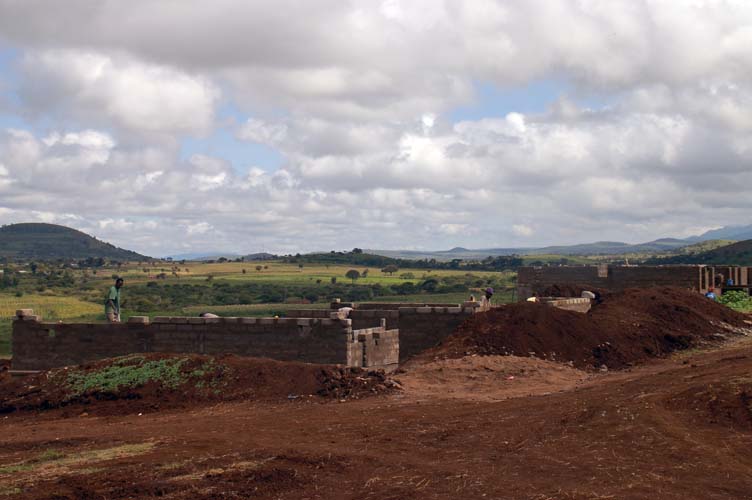
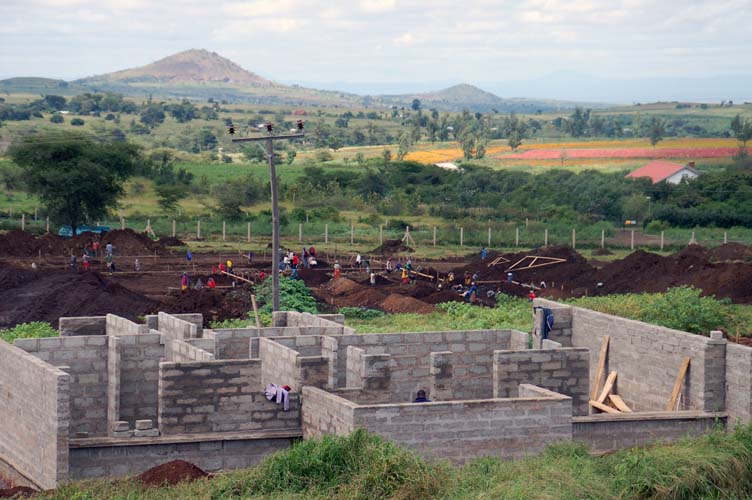
 Construction continues--the actual administration building foundation's are being dug and walls are going up everywhere! This is the headmaster's house (note the beautiful flowers on the farms in the background!) It really is a spectacular view at this time of the year. Sunny and green everywhere! You really should come to see it! But trust me--skip the rainy season! :-)
Tuesday, June 13, 2006
Wana Jenga! (We are Building)
Construction continues--the actual administration building foundation's are being dug and walls are going up everywhere! This is the headmaster's house (note the beautiful flowers on the farms in the background!) It really is a spectacular view at this time of the year. Sunny and green everywhere! You really should come to see it! But trust me--skip the rainy season! :-)
Cameron's Final Project
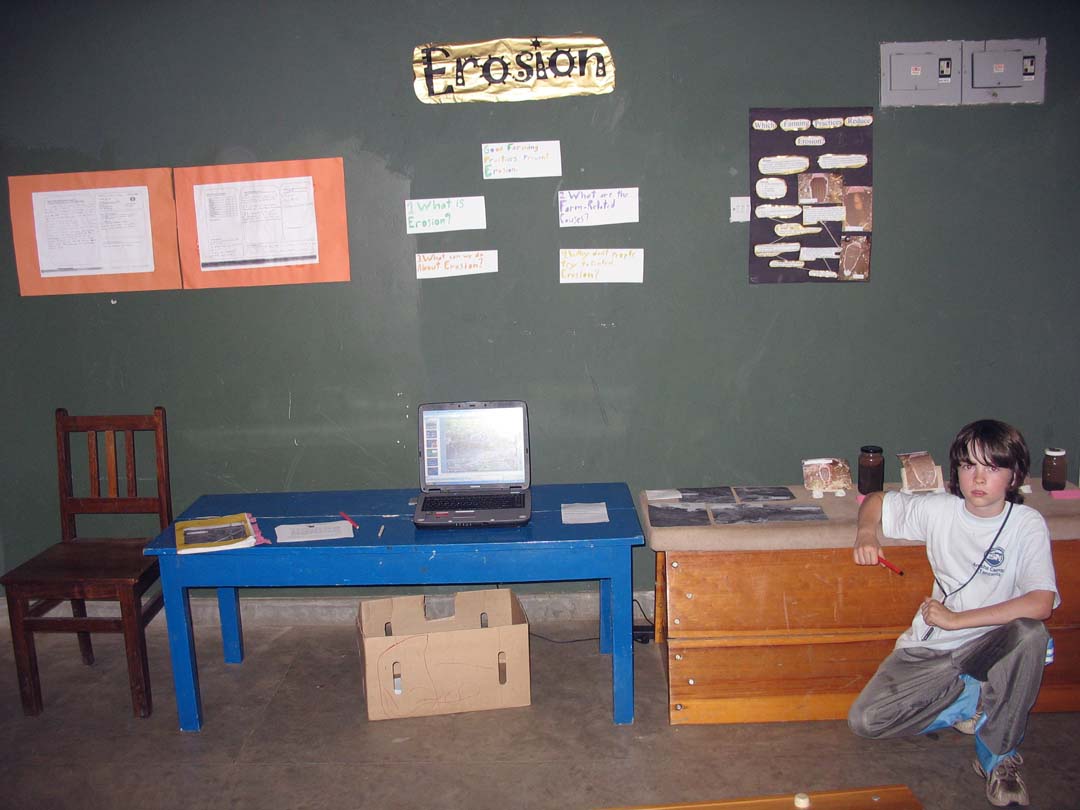
The international school that the kids attend is an inquiry-based learner-driven program, so there is a big emphasis on the student creating the framework for learning and using what they've learned. Today Cameron's class are showing their final primary projects (they will all be in secondary school next year).
The project began with a central idea--"Humans have an impact on the world around them." From that the students had to develop their own research project and focus. Topics ranged from indiginous peoples farming to pollution. Cameron chose farming techniques and soil conversation, a topic that is very important here and one he knew nothing about. The key is that everything was student-lead. Other than meeting with him once a week and monitoring his progress, we were hands-off, as was his teacher. At the show this afternoon he displayed his work.
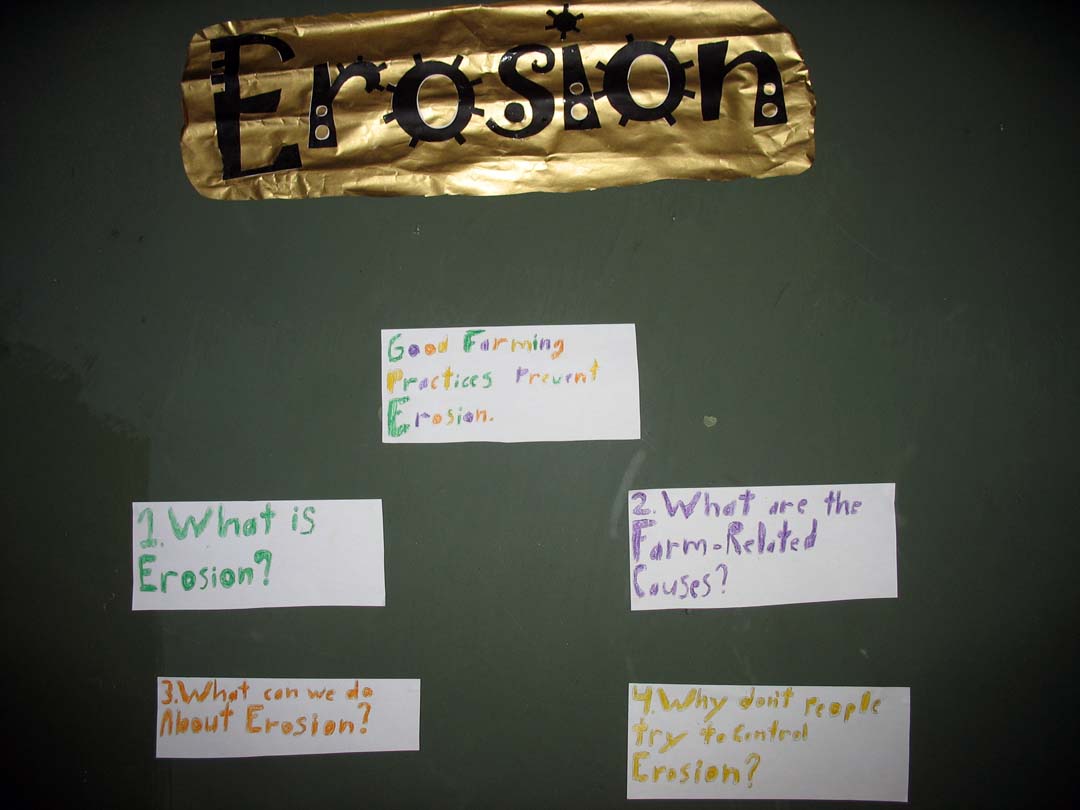
Cameron worked to develop his guiding questions that would direct his research efforts. This part was challenging for him, as he has been used to having a teacher tell him what to do or how to organize his project. It was frustrating for him when the teacher wouldn't tell him he was doing it "right" but would ask him questions designed to direct his next steps. But off he went to work!
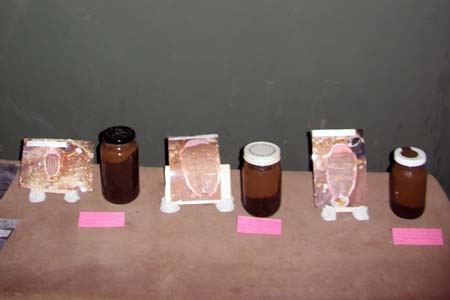
His final display included a powerpoint presentation (which included information and photos taken around the Arusha area and on the PHA site of erosion and good/back farming practices) a science experiment writeup showing the amount of soil loss from different farming techniques (the jars in the photos show the soil runoff), a journal that all his work product and learning/planning, and his planner, his overall framework for the project. Yikes!
We are so proud of his effort and the level of work that he produced. It was an 8 week project and the biggest academic task he's ever tackled (and one that wouldn't be attempted in such an independent way at home until at least 8th grade). He spent at least 3 hours a day on it 6 days a week! Way to go Cam!
Monday, June 12, 2006
My first week in Tanzania
Hello, everyone! Hopefully, this will be one of many guest posts that I make on Carla's blog! I have had an amazing first week in Tanzania. I have wonderful hosts, the weather has been beautiful, and everyone has been so friendly.
As you can see from Carla's previous post, teaching at St. Margaret's has also gone well - I plan to start teaching some of the older kids how to read music later this week. They are such quick learners and are very respectful of adults. Every time I enter a room, all of the students stand and say in unison, "Good morning teacher" and when I say good morning and ask how they are doing, they reply "We are fine, thank you. How are you?" It is so cute.
Lately, I have been thinking a lot about how best to use the resources that God has given to me. While this was something that I had thought about occasionally in the U.S. it is very difficult not to think about it here. Every day on the street I see children who do not have enough food or proper clothing, I am confronted with clearly suffering and diseased beggars in town, and yet I have so much. How should I respond? I am still working that out and probably will be for quite some time! However, my time here so far has been a good reminder that all that I have been given is not mine, and thus is not mine to hoard!
However, it has difficult not become a little cynical after being asked for money time and time again. I don't like that because some of the requests are probably valid, but after so many requests, I find myself holding tighter to my money and possessions than ever. While I cannot give to everyone who asks for money, when I do give, I want to do so joyfully.
Anyway, I hope things are well with all of you! Take care!
Rachel
As you can see from Carla's previous post, teaching at St. Margaret's has also gone well - I plan to start teaching some of the older kids how to read music later this week. They are such quick learners and are very respectful of adults. Every time I enter a room, all of the students stand and say in unison, "Good morning teacher" and when I say good morning and ask how they are doing, they reply "We are fine, thank you. How are you?" It is so cute.
Lately, I have been thinking a lot about how best to use the resources that God has given to me. While this was something that I had thought about occasionally in the U.S. it is very difficult not to think about it here. Every day on the street I see children who do not have enough food or proper clothing, I am confronted with clearly suffering and diseased beggars in town, and yet I have so much. How should I respond? I am still working that out and probably will be for quite some time! However, my time here so far has been a good reminder that all that I have been given is not mine, and thus is not mine to hoard!
However, it has difficult not become a little cynical after being asked for money time and time again. I don't like that because some of the requests are probably valid, but after so many requests, I find myself holding tighter to my money and possessions than ever. While I cannot give to everyone who asks for money, when I do give, I want to do so joyfully.
Anyway, I hope things are well with all of you! Take care!
Rachel
Sunday, June 11, 2006
Rachel Visits the Snake Park
 So how could we NOT take Rachel to the Snake Park? Out of respect to our readers, we have not posted pics of our last visit, which was feeding day. In which several mice and a bunny met their Maker right in front of our eyes. Sadly, nothing that exciting this time.
No, we did not arrive by camel. Ava just loves to do this and Rachel was more than accommodating. Does she look scared? She took off her glasses--maybe so she didn't have to look down?
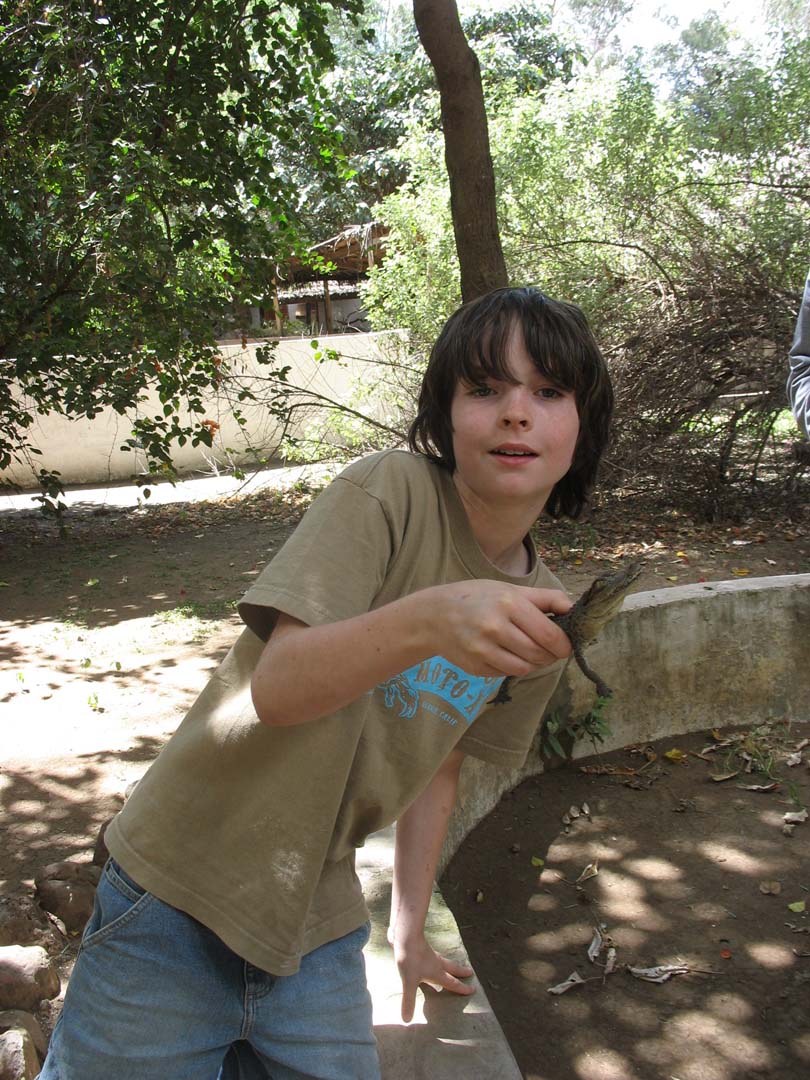 There always seems to be some new twist to the Snake Park. Today it was "hold a baby crocodile" day. Cameron was a bit nervous, so we're telling him to hold it over the pit in case he drops it. You'll notice the pit is not deep, nor is it covered...the better for young children to reach in grab something when their parents are distracted, I guess. They're baby Nile crocs, the world's largest croc, and although tiny now, they do have some wicked teeth!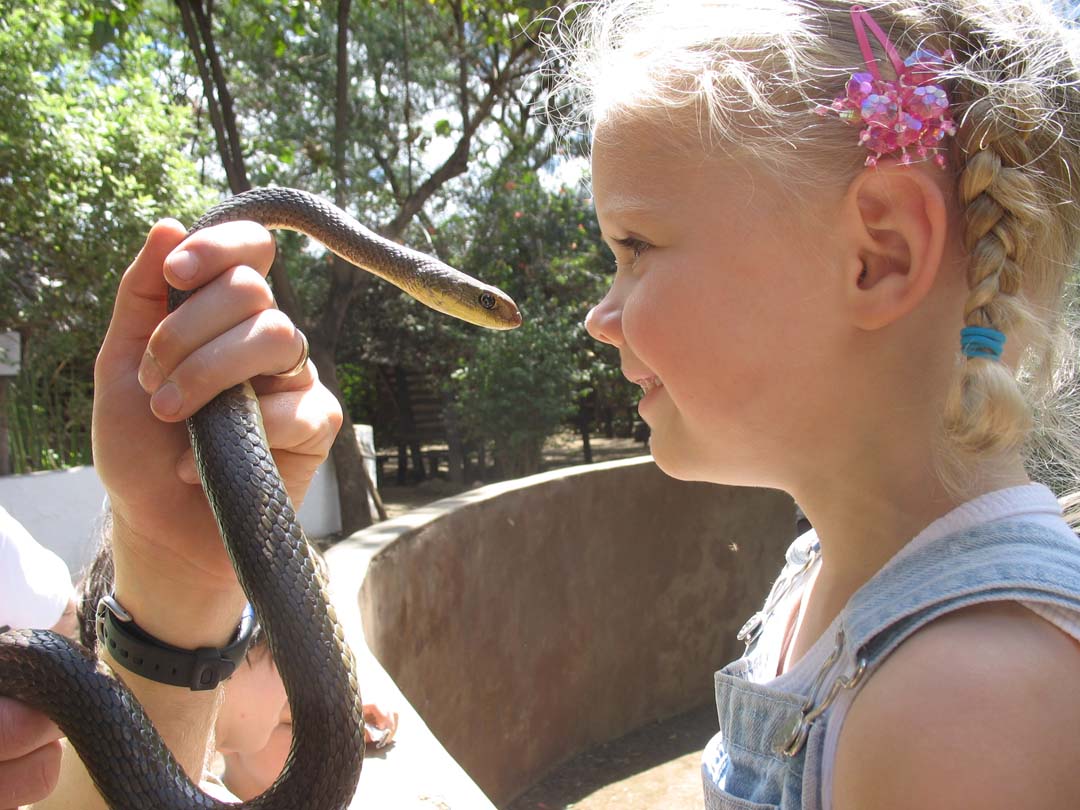
The olive snake seems to be just about the only non-threatening thing at the Snake Park. Ava's definitely interested...no fear there! But since we saw this particular snake swallow a mouse a few weeks ago, I wonder if it's not somehow sizing her up for lunch...
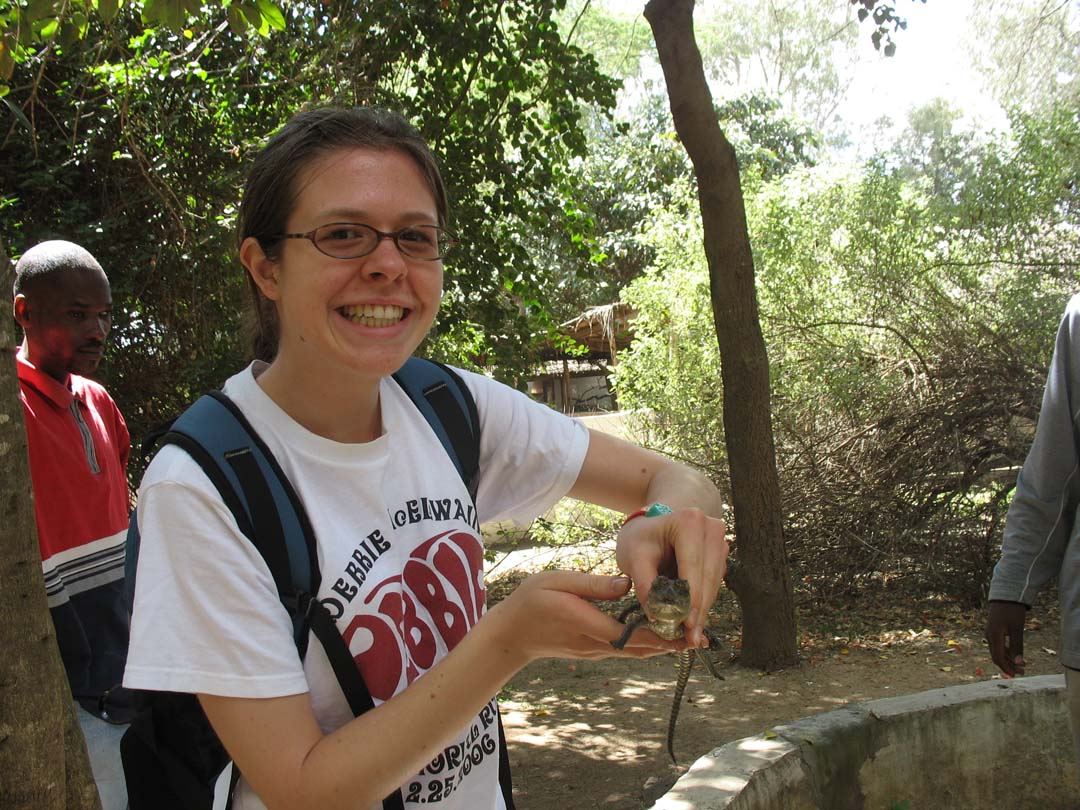
Even Rachel proved to be brave and intrepid! Funny, I guess I forgot to mention this part when I told her about things to do in Africa...she's a terrific sport in more ways than one...she's letting me put pics of her on my blog!
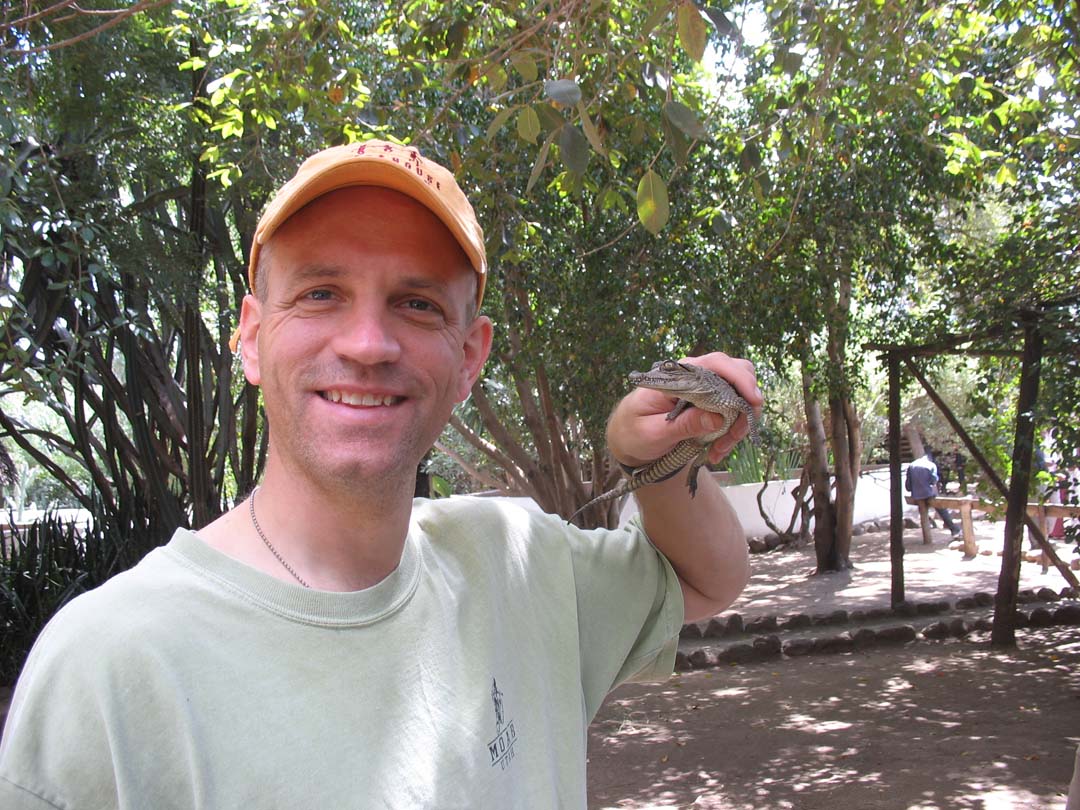 And finally for those of you who wonder just where Mark is on this blog...well, he's working so hard all the time we just can't seem to get a picture of him! But he did emerge out of the workshop for this occasion and manhandled the local wildlife with the rest of us!
And one last note for those who might wonder why I'm not in the scene--well, HELLO! These pictures don't take themselves, you know! And I'll go on record stating that this stuff with lizards and snakes doesn't bother me in the least (well, not the poisonous ones) and I've chased down plenty of both in my lifetime!
Tuesday, June 06, 2006
Rachel's Here!
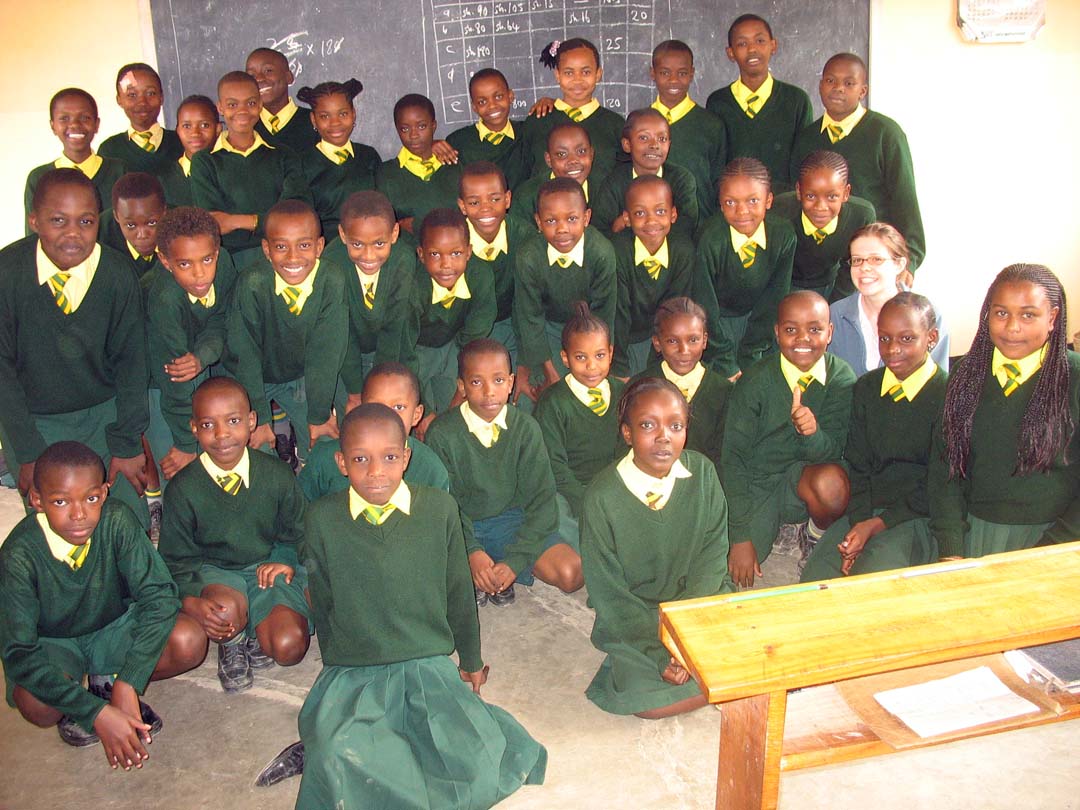 Here's Rachel! Fresh from Minneapolis, she arrived safe and sound Thursday night in Tanzania. Rachel is our first solo volunteer and a member of our home church (Peace Lutheran). She is giving recorder and music lessons to students at St. Margaret's Academy, a primary school near Arusha. St. Margaret's was just celebrated for having the 4th highest test scores in the nation--test scores are the only measure of a school's quality, so this was a big honor for them.
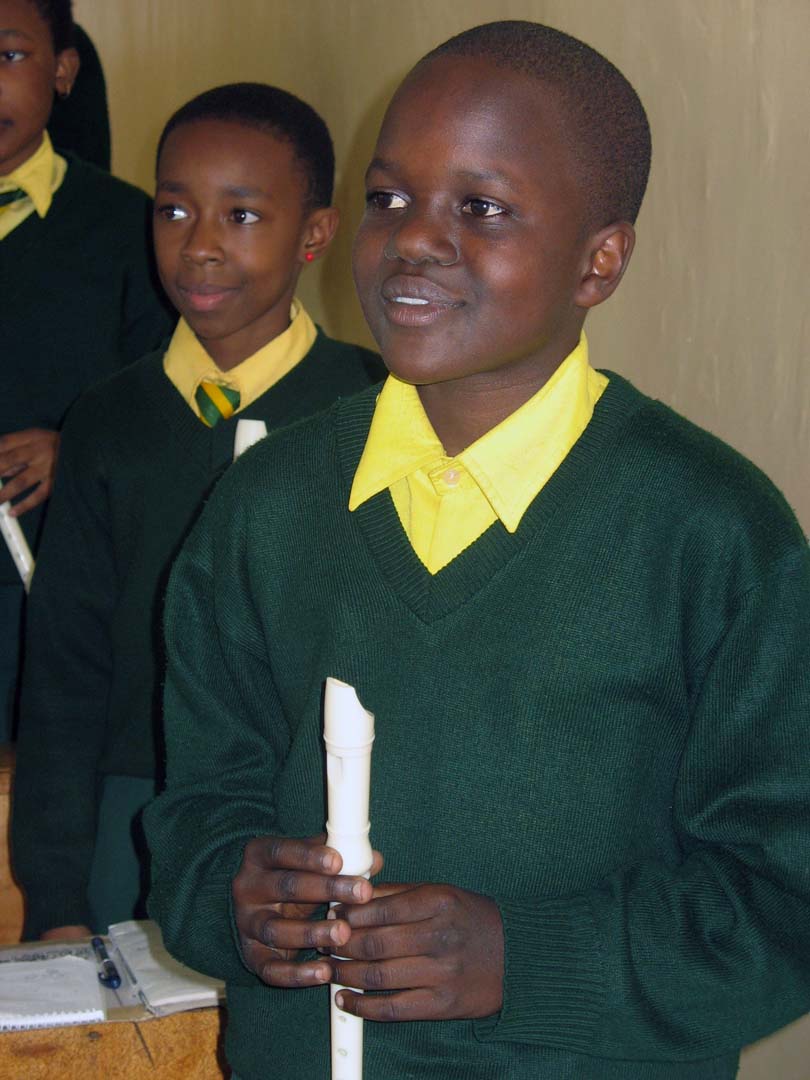
Although the students in Tanzania can sing beautifully and effortlessly, they have little formal music instruction and no opportunities for playing musical instruments. They were so excited to learn that a music teacher was coming!
Like all students, it's hard to resist the tooting and honking that seems to go on in every classroom, but they are enthusiastic and very keen to learn. These are the Standard 6 and 7 students, most of whom are between 12 and 14 years of age. In one 40 minute lesson, they have learned that old stand-by "Hot Cross Buns". The Standard 1 and 2 students (6-8 years old) will need a bit more practice!

Rachel will be teaching 3 days a week. During each week she'll see all 350 students twice so that all students will get at least 7-8 lessons. The recorders and music that she's collected will be donated to the school in hopes that they will be able to somehow continue music there.

In case you're wondering, St. Margaret's is not a PHF-sponsored or affiliated organization. Rachel will also be working on PHF things as well; however, she had been awarded a scholarship from her college and because we had known her, we were able to establish a connection for her. She is a unique case in that respect. We are thrilled to see a familiar face here and her first two days have been great! Check in and you should see her guest-posting about her impressions and experiences while she's here.
Sunday, June 04, 2006
Those Tanzanian Blessings
Blessing #1: Arusha Community Church. Our church is interdenominational and represents Chrisitian faiths from around the world. It's unusual in that it is lay-lead and has no pastor, the idea being that this format keeps the church more ecumenical, rather than Lutheran or Methodist, etc. There are always a number of pastors attending as well as excellent lay preachers! What makes it a blessing is the way that we have been so warmly welcomed into the church. It has been a source of support, information, and faith-building that has helped us tremendously. Everyone has come here from someplace else for a variety of projects and it creates a diverse dynamic that's really exciting to be a part of. I attend the women's Bible study (last week there were 22 women from 19 countries), Mark attend the men's study, and we also do a study with the people in our neighborhood.
Blessing #2: Isaya. He's the man in charge of planting the trees and orchard at PHA. But he's doing such amazing things everywhere! At the site he has told his workers that since they are working at a school, they are also students. He has a rotating system of work so that all the workers have a chance to learn about how trees are planted, raised, and cared for properly. When they have learned a particular skill, he moves them onto another task and moves another group in. In that way, he's helping to teach these workers techniques they can use with their own farms or on other jobs. He's very interested in all aspects of the PHA project and has offered some good suggestions for future planning in terms of planting. He also works with his village and nearby villages to improve farming techniques and move toward organic farming. He is also building a dam with a turbine that will create its own electricity to run the pumps to carry water to a village and a secondary school. He also has been working with Cameron this term on teaching him about soil conservation and farming for Cameron' big school project. He is a true gift from God, not only for PHA, but for all the people whose lives he touches with his efforts and compassion.
Blessing #3: Our staff. Yasini (our housekeeper) is helpful on all fronts. He works hard, helps with our Swahili, and is a great father to his children and friend to ours. Nda (our gardener) speaks no English and has only spoken Swahili for a few years (he is Maasai and came to Arusha from Ngorongoro a few years ago). Communication is time-consuming but he is always patient with us. He works hard every day all day with almost no direction from us. We have heard many stories of housekeepers and gardeners that have to be monitored constantly in order to get minimal work done. Both Nda and Yasini are above reproach in that respect. Godfrey (our night guard) puts in a 12 hour shift nights a week on our porch. Ava and Happy (Yasini's daughter) run to the gate to greet him every evening and he spends the first couple hours every night playing with the kids. He has become part of our family as well.
Blessings abound here, as they do everywhere, even in the midst of the hardships of life. We are blessed to be here in this beautiful country, surrounded by extraordinary people, doing what they have been called to do. What more could we ask for?
Blessing #2: Isaya. He's the man in charge of planting the trees and orchard at PHA. But he's doing such amazing things everywhere! At the site he has told his workers that since they are working at a school, they are also students. He has a rotating system of work so that all the workers have a chance to learn about how trees are planted, raised, and cared for properly. When they have learned a particular skill, he moves them onto another task and moves another group in. In that way, he's helping to teach these workers techniques they can use with their own farms or on other jobs. He's very interested in all aspects of the PHA project and has offered some good suggestions for future planning in terms of planting. He also works with his village and nearby villages to improve farming techniques and move toward organic farming. He is also building a dam with a turbine that will create its own electricity to run the pumps to carry water to a village and a secondary school. He also has been working with Cameron this term on teaching him about soil conservation and farming for Cameron' big school project. He is a true gift from God, not only for PHA, but for all the people whose lives he touches with his efforts and compassion.
Blessing #3: Our staff. Yasini (our housekeeper) is helpful on all fronts. He works hard, helps with our Swahili, and is a great father to his children and friend to ours. Nda (our gardener) speaks no English and has only spoken Swahili for a few years (he is Maasai and came to Arusha from Ngorongoro a few years ago). Communication is time-consuming but he is always patient with us. He works hard every day all day with almost no direction from us. We have heard many stories of housekeepers and gardeners that have to be monitored constantly in order to get minimal work done. Both Nda and Yasini are above reproach in that respect. Godfrey (our night guard) puts in a 12 hour shift nights a week on our porch. Ava and Happy (Yasini's daughter) run to the gate to greet him every evening and he spends the first couple hours every night playing with the kids. He has become part of our family as well.
Blessings abound here, as they do everywhere, even in the midst of the hardships of life. We are blessed to be here in this beautiful country, surrounded by extraordinary people, doing what they have been called to do. What more could we ask for?
Tuesday, May 30, 2006
I Missed This Episode on Martha Stewart
Buying meat here can be a challenge. Chicken tends to be fine, but the beef is generally very tough. It takes a lot of long slow cooking to make it chewable. I was trying to figure out the best way to tenderize tonight's dinner when I came across this tasty tidbit on the internet....
Tough meat is tough. I propose that sterilized maggots be used to tenderize tough meat such as wild game birds and lean cuts.
Maggots generate a potent brew of tenderizing proteolytic enzymes. Sterilized maggots would be added to a fresh cut of tough, lean meat and allowed to work. Before cooking, the meat would be gently heated from below, encouraging all maggots to evacuate. The supremely tender meat would then be prepared and served. The tunnels left by the maggots would also allow better penetration of sauce / marinade. The diner would never know.
OK, I've eaten a number of things in my day (including the famous Rocky Mountain Oysters) under the heading "it's best if I don't know what it is before I eat it." But as God is my witness, if I EVER found this out, I'd be returning my eaten meal post-haste. How in the world do you sterilize a maggot? As if that would make the whole thing more palatable. Right now, in my very limited kitchen, I'm pretty sure I can find at least 10 items I can use to run holes through tonight's main course. And how does he know the maggots will evacuate (oh, it's a "he" all right--you can bet on that)?
I think I'm going to take a pass on this little kitchen tip. And to make up for this gruesome post, I offer up my friend Lindsay, who publishes delicious recipes on her blog at www.mainegirll.blogspot.com. You can recover from my post by checking out her recipe for cochinita pibil (pork tacos in orange and annatto marinade) which sounds absolutely fabulous.
by the way--I realize this has nothing to do with the previous post about Tanzanian blessings. I just couldn't resist.
Tough meat is tough. I propose that sterilized maggots be used to tenderize tough meat such as wild game birds and lean cuts.
Maggots generate a potent brew of tenderizing proteolytic enzymes. Sterilized maggots would be added to a fresh cut of tough, lean meat and allowed to work. Before cooking, the meat would be gently heated from below, encouraging all maggots to evacuate. The supremely tender meat would then be prepared and served. The tunnels left by the maggots would also allow better penetration of sauce / marinade. The diner would never know.
OK, I've eaten a number of things in my day (including the famous Rocky Mountain Oysters) under the heading "it's best if I don't know what it is before I eat it." But as God is my witness, if I EVER found this out, I'd be returning my eaten meal post-haste. How in the world do you sterilize a maggot? As if that would make the whole thing more palatable. Right now, in my very limited kitchen, I'm pretty sure I can find at least 10 items I can use to run holes through tonight's main course. And how does he know the maggots will evacuate (oh, it's a "he" all right--you can bet on that)?
I think I'm going to take a pass on this little kitchen tip. And to make up for this gruesome post, I offer up my friend Lindsay, who publishes delicious recipes on her blog at www.mainegirll.blogspot.com. You can recover from my post by checking out her recipe for cochinita pibil (pork tacos in orange and annatto marinade) which sounds absolutely fabulous.
by the way--I realize this has nothing to do with the previous post about Tanzanian blessings. I just couldn't resist.
In the course of a lifetime, what does it matter?
I had a post all (mentally written) about paying my electric bill today and my trip tomorrow to fix my voltage regulator...
But what good would it do? I'd just perseverate on how I was feeling, which doesn't do me any good. And you, dear readers, get yet another installment of what's wrong with Tanzania. Which is exactly the impression I struggle against every day.
So I (again, mentally) tossed that post and have committed myself to actively looking for the blessings that are present here every day.
So there.
But what good would it do? I'd just perseverate on how I was feeling, which doesn't do me any good. And you, dear readers, get yet another installment of what's wrong with Tanzania. Which is exactly the impression I struggle against every day.
So I (again, mentally) tossed that post and have committed myself to actively looking for the blessings that are present here every day.
So there.
Monday, May 29, 2006
Meet Sydney
 Introducing Sydney! We think she's pretty adorable. The kids have been wanting a dog, but I was just not at all interested in a puppy (I successfully resisted their pleas for the Dalmation puppies advertised at school, not to mention the ongoing "it's going to die, Mom, if we don't take i
 t" chorus whenever we see a dog/puppy on our trips around town--they're probably right, of course, but I can't save every dog--can I?). Anyway, we had been asking around for anyone who might know of someone who would have a kid-friendly dog. Our vet called us Friday and told us about Sydney. She lived with 5 other dogs, and was great with all of them but fought constantly with their dachshund. Finally, the woman just couldn't deal with it anymore. She arrived Friday evening with the battle scars of her encounters with the dog. We were a bit nervous about her and Ruka--Jack Russells can be very tough dogs and if she was used to fighting... sadly, we've learned that Ruka is quite the bully. Not content to simply sit on the bookcase or table and hiss, he stalks poor Sydney through the house and attacks unexpectedly. Poor Sydney won't even make eye contact with him! I suppose they'll eventually come to some sort of arrangement. Anyway, she's adorable and friendly and portable. I don't know about her watchdog potential--but just having a dog around can be a deterrant, and Tanzanians are often especially leery of "mzungu" dogs--since all Tanzanian dogs look pretty much the same, a dog that resembles a particular breed makes them nervous. Let's hope!
Saturday, May 20, 2006
This is the House that They've Built
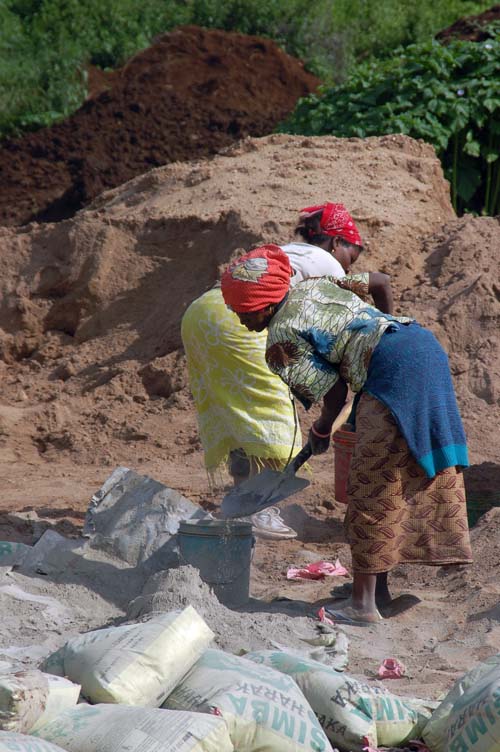
I've mentioned several times the fact that virtually all of the construction work is done by hand. These are some of the people that labor every day, rain and shine, to build Peace House Academy.
 I was surprised to find so many women working at the site. But I'm glad that they are given an opportunity to support their families, too. These women are filling the 5 gallon buckets with gravel and then carrying it (on their heads) over to the mixer to make the concrete. The women below are doing the same with the concrete mix.
 These are some of the men also working. Except that some are clearly not men, but boys. There are thousands of children in Arusha that cannot afford school fees to attend school. They have very few options. As hard as it is for me to see these boys working so hard when they should be in school, I also understand that they are being given a chance to do honest work that can support their families. They also have an opportunity to learn some skills as a laborer as well. I don't think for a minute that this in any way is equal to the opportunities they should have to go to school--but given the realities of life here, and what other "opportunities" exist for children that don't have an education or are forced to fend for themselves, this is something a little better.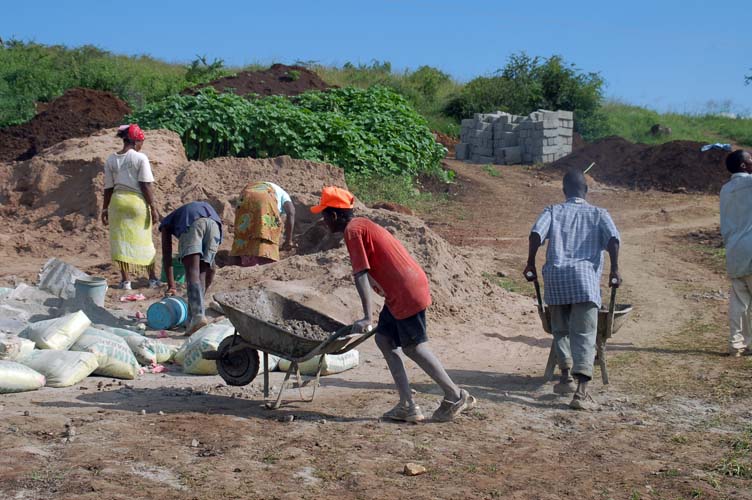
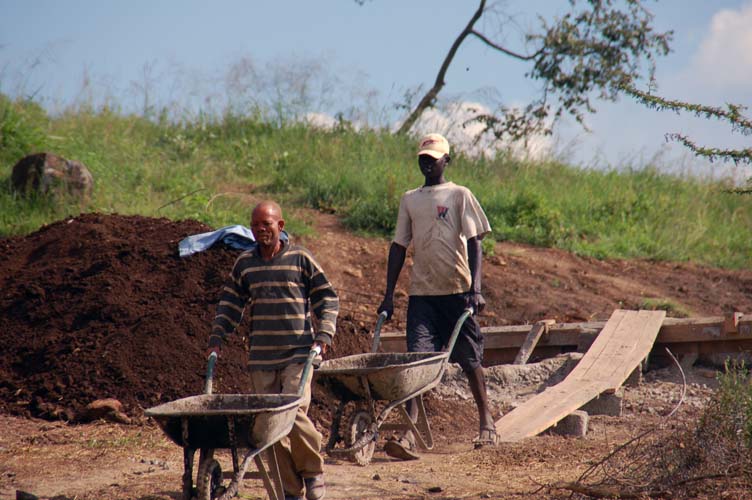
The Work Continues...
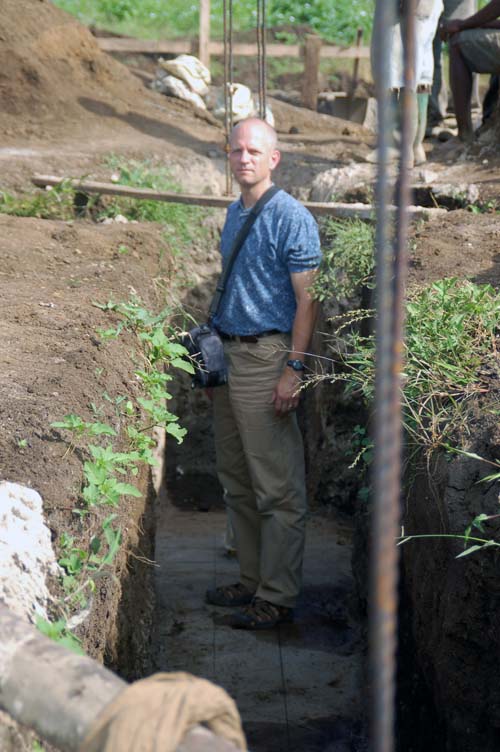 Mark is standing in one of the foundation trenches. Here's the kicker--he's standing on almost 3 feet of concrete! The soil on the site is called "black cotton" and during the rain it's unbelievably sticky and nasty. It's difficult to build on and the foundation needs to go down beyond that type of soil. Every time I go there I'm just amazed that all the work is done by hand.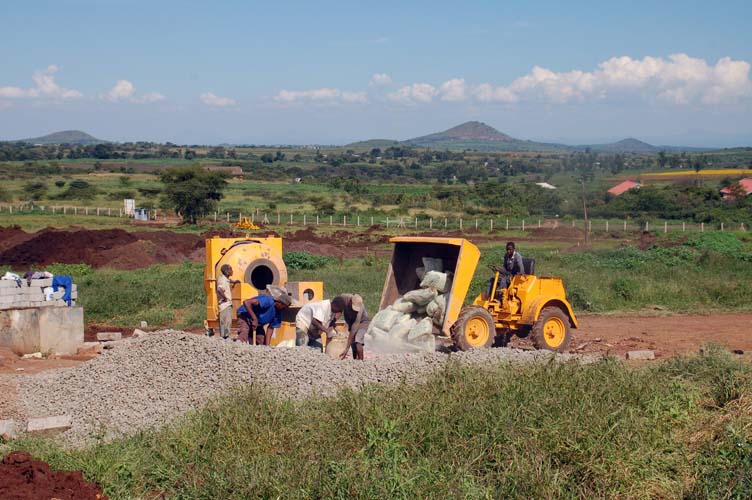
OK, I guess not ENTIRELY by hand. But enough that I can attest to the strength of the people here. I don't know anyone who could work like this--and then walk an hour to the road to catch a bus home and then carry water, firewood, etc. to cook a meal, and then repeat it day after day.
An (African) Fall View
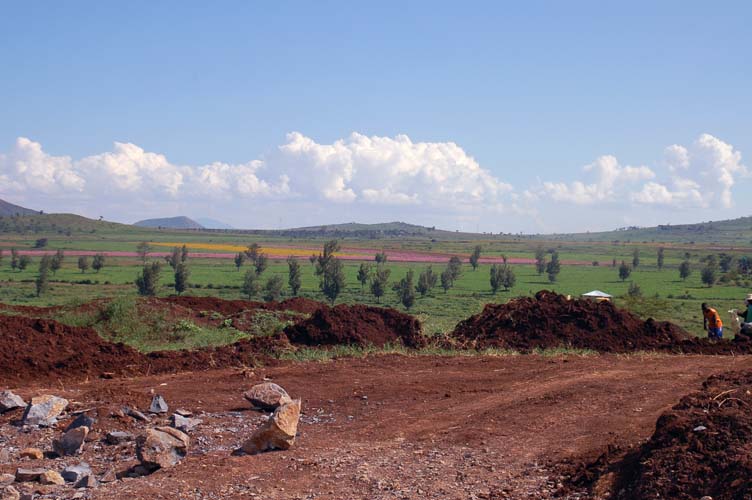 Since June through August are the winter months here, I guess we're at the tail end of fall now. It's hard to reconcile this autumn picture with a traditional Minnesota fall day.
However, being a big fan of (non-humid) hot weather, I love it. In the distance you can see enormous fields of yellow and pink flowers from a flower farm. They are just beautiful. No matter where you look, there's something wonderful that catches your eye. Today was just about perfect--the ground has dried out with 4 days of no rain, the weather was hot, the grass was green--it was heavenly.
A Guest Post
Last spring we met the O'Neils. Steve was the principal at Minnehaha Academy--he and his family moved to Dar es Salaam in July so they are a few months ahead on the learning curve. Steve was in our Swahili language class in February and both our families will be there again in July.
They send out their own email updates on their lives and their last update just seemed to hit on the difficulties we face in living here. If you remember my post on the woman selling baskets at the gate--well, Denae says it much better than I did, so I'm posting her thoughts on life here.
O Lord, I don’t want to be a spectator
A tour passenger looking out upon the real world
An audience to poverty and want and homelessness
Lord, involve me - call me - implicate me - commit me
And Lord, help me to step off the bus.
I somehow feel that by coming to Tanzania I have forced myself to get off the bus. But now that I am off I have absolutely no idea what to do. We moved into our own rented house this week. It has been a challenge to us in more ways than just regular moving stress. These are the thoughts that are running through my head this week:
“If anyone has material possessions and sees his brother in need but has no pity on him, how can the love of God be in him?” I John 4: 17
My next door neighbor lives in a room made of tin, set in the middle of a large puddle (at least during the rainy season) with her two children. Yet the person next to her is not much better off, nor is the person across the street from us, or behind us, or on the other side of us for that matter. How am I supposed to live this verse out?
“Give to everyone who asks of you, and if anyone takes what belongs to you, do not demand it back.” Luke 6:30
There have been so many requests for work - knocks on the gate, “ I am looking for work, do you have any, Mama? I would be so happy to work for you.” or “Things are very hard now for me, Mama, could you please consider helping me? I would work very hard for you. It would be a great help to me.” On and on go the requests yet I can only choose two to work for us. How do I decide which ones? How do I give to everyone who asks?
I passed three men on the road yesterday cutting a city water pipe. This is so they will have drinking water. Yet it also means water floods my neighbor’s home and rushes down the street causing immense ruts in the already washed away road, (I have in two weeks punctured one tire and scraped off the exhaust system of one car) and leaves us with no water. My feelings waffle between pity for their situation and frustration at their illegal behavior. Do I respond by illegally offering them to use my spigot?
I’m not sure I like being off the bus. It is awkward and humiliating and oh so difficult to make decisions off the bus. Somehow, it was easier to think of answers on the bus. Perhaps this is right where God wants us - confused, humbled, and only able to give the love He has put there in the first place.
They send out their own email updates on their lives and their last update just seemed to hit on the difficulties we face in living here. If you remember my post on the woman selling baskets at the gate--well, Denae says it much better than I did, so I'm posting her thoughts on life here.
O Lord, I don’t want to be a spectator
A tour passenger looking out upon the real world
An audience to poverty and want and homelessness
Lord, involve me - call me - implicate me - commit me
And Lord, help me to step off the bus.
I somehow feel that by coming to Tanzania I have forced myself to get off the bus. But now that I am off I have absolutely no idea what to do. We moved into our own rented house this week. It has been a challenge to us in more ways than just regular moving stress. These are the thoughts that are running through my head this week:
“If anyone has material possessions and sees his brother in need but has no pity on him, how can the love of God be in him?” I John 4: 17
My next door neighbor lives in a room made of tin, set in the middle of a large puddle (at least during the rainy season) with her two children. Yet the person next to her is not much better off, nor is the person across the street from us, or behind us, or on the other side of us for that matter. How am I supposed to live this verse out?
“Give to everyone who asks of you, and if anyone takes what belongs to you, do not demand it back.” Luke 6:30
There have been so many requests for work - knocks on the gate, “ I am looking for work, do you have any, Mama? I would be so happy to work for you.” or “Things are very hard now for me, Mama, could you please consider helping me? I would work very hard for you. It would be a great help to me.” On and on go the requests yet I can only choose two to work for us. How do I decide which ones? How do I give to everyone who asks?
I passed three men on the road yesterday cutting a city water pipe. This is so they will have drinking water. Yet it also means water floods my neighbor’s home and rushes down the street causing immense ruts in the already washed away road, (I have in two weeks punctured one tire and scraped off the exhaust system of one car) and leaves us with no water. My feelings waffle between pity for their situation and frustration at their illegal behavior. Do I respond by illegally offering them to use my spigot?
I’m not sure I like being off the bus. It is awkward and humiliating and oh so difficult to make decisions off the bus. Somehow, it was easier to think of answers on the bus. Perhaps this is right where God wants us - confused, humbled, and only able to give the love He has put there in the first place.
Thursday, May 18, 2006
More on Tanzanian Education
Some partial news stories from the paper this week--
*The government revealed that the country is in danger of losing more than 27,000 teachers by 2020 from AIDs. That amounts to approximately 3,600 teachers per year. The country has the capacity to train approximately 1,200 teachers per year, which even currently does not meet the need.
*Suppliers of food to public secondary schools, including boarding schools, in Tabora have stopped their services because they say the government owes them Tsh300 million (approximately $250,000).
*The Dr. Omary Ally Juma Primary School in Dar es Salaam has 2,320 students--and no bathrooms. They are forced to share the 9 latrines with the school next door--the Karume Primary School, which has 2,600 students. That's almost 5,000 students for 9 pit toilets. Amazingly, these two schools used to be one large monstrosity, but they were divided after the Primary Education Development Plan in 2001. The act called for splitting overcroweded schools to create more space for new students.
Parents of students at these schools are unwilling/unable to pay for digging more latrines. Many of the children come from homes where several families share one latrine, or have none available.
Apparently the PEDP, which mandates education for all children ages 7-13, placed emphasis on building classrooms, but not anything else (like sanitation facilities). This act, along with the Secondary Education Development Plan, calls for more schools and more teachers, but with virtually no funding to accomplish either.
The teaching profession here can be bleak. Once a teacher graduates, they are assigned to a government school somewhere in the country and have little say in where they go. Once they've begun their teacher track, if they leave the profession at any time during their lives they lose all their pension. So you have a situation where a person is bound financially to be a teacher for 30+ years, even if they found out after year 4 that they really weren't suited for the job. Teachers who are able to land jobs in private schools don't have the same restrictions, but those jobs are even harder to find.
So if you are pondering the status of American education (Lord knows there's room for improvement there, too)--you can be grateful for all the things we can afford to take for granted.
*The government revealed that the country is in danger of losing more than 27,000 teachers by 2020 from AIDs. That amounts to approximately 3,600 teachers per year. The country has the capacity to train approximately 1,200 teachers per year, which even currently does not meet the need.
*Suppliers of food to public secondary schools, including boarding schools, in Tabora have stopped their services because they say the government owes them Tsh300 million (approximately $250,000).
*The Dr. Omary Ally Juma Primary School in Dar es Salaam has 2,320 students--and no bathrooms. They are forced to share the 9 latrines with the school next door--the Karume Primary School, which has 2,600 students. That's almost 5,000 students for 9 pit toilets. Amazingly, these two schools used to be one large monstrosity, but they were divided after the Primary Education Development Plan in 2001. The act called for splitting overcroweded schools to create more space for new students.
Parents of students at these schools are unwilling/unable to pay for digging more latrines. Many of the children come from homes where several families share one latrine, or have none available.
Apparently the PEDP, which mandates education for all children ages 7-13, placed emphasis on building classrooms, but not anything else (like sanitation facilities). This act, along with the Secondary Education Development Plan, calls for more schools and more teachers, but with virtually no funding to accomplish either.
The teaching profession here can be bleak. Once a teacher graduates, they are assigned to a government school somewhere in the country and have little say in where they go. Once they've begun their teacher track, if they leave the profession at any time during their lives they lose all their pension. So you have a situation where a person is bound financially to be a teacher for 30+ years, even if they found out after year 4 that they really weren't suited for the job. Teachers who are able to land jobs in private schools don't have the same restrictions, but those jobs are even harder to find.
So if you are pondering the status of American education (Lord knows there's room for improvement there, too)--you can be grateful for all the things we can afford to take for granted.
Tuesday, May 16, 2006
What do you do?
Where the needs of the world and your talents cross, there lies your vocation.
Aristotle said it. I've always wondered why some people choose their jobs. As a teacher I've always loved what I've done and felt that what I was doing was very important as well as terrifically rewarding. I've also been blessed to be able to choose a career, rather than just having to do a job (although I did do that stint at Marshall Field's down on the docks, so I've been that route,too).
So if you're doing something that matters to others and is rewarding to you...congratulations!
Aristotle said it. I've always wondered why some people choose their jobs. As a teacher I've always loved what I've done and felt that what I was doing was very important as well as terrifically rewarding. I've also been blessed to be able to choose a career, rather than just having to do a job (although I did do that stint at Marshall Field's down on the docks, so I've been that route,too).
So if you're doing something that matters to others and is rewarding to you...congratulations!
Friday, May 12, 2006
Peace House Makes the News
From the "Arusha Times" newspaper (online):
ELCT Praises Efforts to Fight Corruption Arusha Times (Arusha)
May 6, 2006
Posted to the web May 8, 2006
By Thomas Ratsim
Arusha Bishop Thomas Laiser of the Evangelical Lutheran Church (ELCT) Diocese in Arusha Region has said that since the Fourth Phase Government came to power under President Jakaya Kikwete, it has laid discipline and etiquette hence thus boosting morale in government offices.
The Right Reverend Laiser praised President Kikwete for his daring moves even to "pinch the untouchables" in his efforts to eradicate corruption and misconduct. Kikwete's Government has been fighting graft and now delinquents do not even dare to accept bribes, he said.
The Bishop made this acclamation at the Impala Hotel on Friday, April 28 during a fund raising ceremony of the Diocesan Development Fund, which was presided by the Prime Minister Mr. Edward Lowassa. The fund is to finance the church's social projects.
Bishop Laiser also praised the Government for outlawing a corruption version of hospitality, widely known as takrima, the practice which he said the church has been against. He also congratulated the Government for its efforts in curbing banditry in the country, a measure, which has been strongly cherished by the public.
In the fund raising drive, a total of Shs. 126 million was realized. Of the amount Shs.106 million was collected on the spot while Shs. 20 million was pledges.
Amongst the major projects being implemented by the Diocese in Arusha Region, each costing 5 billion shillings , are the construction of an orphan Secondary School at Kisongo, known as Peace House Academy and the Arusha Lutheran Medical Centre, which is being erected at Levolosi in the Arusha City and is expected to start offering services next year.
During the ceremony, Premier Lowassa, expressed his gratitude to the Peace House Foundation (PHF) for its dedication to construct the, a secondary school for orphans and other underprivileged children of Tanzania. When completed the school will accommodate more than 600 students.
PHF is a United States- based non-profit organization, which currently provides support to over 400 children at primary and secondary schools in northern Tanzania. It also supports local organizations caring for orphans and other vulnerable children who are unable to live with their extended families.
The fund raising ceremony was preceded by the Premier's entourage visit to the projects which are being implemented by the Diocese.
Copyright © 2006 Arusha Times. All rights reserved. Distributed by AllAfrica Global Media (allAfrica.com).
Note: Any spelling or grammatical shortcomings are from the original text. To convert Tshillings to dollars, divide shillings by 1,000 ($1 = Tsh 1,200)
ELCT Praises Efforts to Fight Corruption Arusha Times (Arusha)
May 6, 2006
Posted to the web May 8, 2006
By Thomas Ratsim
Arusha Bishop Thomas Laiser of the Evangelical Lutheran Church (ELCT) Diocese in Arusha Region has said that since the Fourth Phase Government came to power under President Jakaya Kikwete, it has laid discipline and etiquette hence thus boosting morale in government offices.
The Right Reverend Laiser praised President Kikwete for his daring moves even to "pinch the untouchables" in his efforts to eradicate corruption and misconduct. Kikwete's Government has been fighting graft and now delinquents do not even dare to accept bribes, he said.
The Bishop made this acclamation at the Impala Hotel on Friday, April 28 during a fund raising ceremony of the Diocesan Development Fund, which was presided by the Prime Minister Mr. Edward Lowassa. The fund is to finance the church's social projects.
Bishop Laiser also praised the Government for outlawing a corruption version of hospitality, widely known as takrima, the practice which he said the church has been against. He also congratulated the Government for its efforts in curbing banditry in the country, a measure, which has been strongly cherished by the public.
In the fund raising drive, a total of Shs. 126 million was realized. Of the amount Shs.106 million was collected on the spot while Shs. 20 million was pledges.
Amongst the major projects being implemented by the Diocese in Arusha Region, each costing 5 billion shillings , are the construction of an orphan Secondary School at Kisongo, known as Peace House Academy and the Arusha Lutheran Medical Centre, which is being erected at Levolosi in the Arusha City and is expected to start offering services next year.
During the ceremony, Premier Lowassa, expressed his gratitude to the Peace House Foundation (PHF) for its dedication to construct the, a secondary school for orphans and other underprivileged children of Tanzania. When completed the school will accommodate more than 600 students.
PHF is a United States- based non-profit organization, which currently provides support to over 400 children at primary and secondary schools in northern Tanzania. It also supports local organizations caring for orphans and other vulnerable children who are unable to live with their extended families.
The fund raising ceremony was preceded by the Premier's entourage visit to the projects which are being implemented by the Diocese.
Copyright © 2006 Arusha Times. All rights reserved. Distributed by AllAfrica Global Media (allAfrica.com).
Note: Any spelling or grammatical shortcomings are from the original text. To convert Tshillings to dollars, divide shillings by 1,000 ($1 = Tsh 1,200)
Thursday, May 11, 2006
Mere Christianity
I'm just finishing Mere Christianity by CS Lewis. Apparently is has been a very popular book for a long time, although I had just heard of it before I left Minnesota. During WWII, Lewis was asked to give a series of talks about the fundamental beliefs of Christianity over the BBC to the British people.
The book begins with a logical "proof" that God does exist. Then he moves into describing two sets of virtues, one that are universal in nature and another that are specifically Christian and uses those virtues to illustrate our purpose on Earth. His final chapters explain some of the more complex concepts, such as the Trinity, the death of Christ as payment for our sins, etc.
I loved this book on several levels. First of all, it was done originally as a radio broadcast it is very conversational. And it's British and the British have such great ways of expressing themselves that are both humorous and practical. Lewis approaches his topic from a more intellectual perspective which appeals to me. His emphasis is on understanding and knowing, although he does recognize and emphasize the necessity of having that emotional connection with God in order to have a relationship with Him. Lewis is able to use the most basic real life examples to illustrate his points. His comparisons between a Christian's war on sin and what was happening in Europe with the Nazis are very effective. His very simple yet eloquent examples really point to how I feel God works in our lives--simple and real, yet all-powerful in ways that we can't imagine.
The other aspect of Lewis' book that appealed to me was his ability to really speak of Christianity as a body, rather than the different denominations. After his conversion (Lewis was formerly an atheist), Lewis was a member of the Church of England. I'm sure that some of his writing is not completely in line with some denominations but he clearly cuts through those differences to get at the heart of what Christians believe. Amazingly, he is able to do it with very few quotes from the Bible--although it is the Bible that is the root of his words and our beliefs.
Lewis does not "prove" that God exists. His book is less than an "argument" and more of an explanation that lays out our beliefs in a way that makes it clear what Christians believe our purpose in life is. If someone who does not have an active faith would read it, it would provide an insight into what they may feel is missing in their lives.
Plus, it's British and I think the tone that he takes as a Brit really makes his points practical and real. Often the true message of Christianity is lost in media interpretation and denominational bickering. Lewis cuts through all of that-- it's a great book for anyone, regardless of their faith.
The book begins with a logical "proof" that God does exist. Then he moves into describing two sets of virtues, one that are universal in nature and another that are specifically Christian and uses those virtues to illustrate our purpose on Earth. His final chapters explain some of the more complex concepts, such as the Trinity, the death of Christ as payment for our sins, etc.
I loved this book on several levels. First of all, it was done originally as a radio broadcast it is very conversational. And it's British and the British have such great ways of expressing themselves that are both humorous and practical. Lewis approaches his topic from a more intellectual perspective which appeals to me. His emphasis is on understanding and knowing, although he does recognize and emphasize the necessity of having that emotional connection with God in order to have a relationship with Him. Lewis is able to use the most basic real life examples to illustrate his points. His comparisons between a Christian's war on sin and what was happening in Europe with the Nazis are very effective. His very simple yet eloquent examples really point to how I feel God works in our lives--simple and real, yet all-powerful in ways that we can't imagine.
The other aspect of Lewis' book that appealed to me was his ability to really speak of Christianity as a body, rather than the different denominations. After his conversion (Lewis was formerly an atheist), Lewis was a member of the Church of England. I'm sure that some of his writing is not completely in line with some denominations but he clearly cuts through those differences to get at the heart of what Christians believe. Amazingly, he is able to do it with very few quotes from the Bible--although it is the Bible that is the root of his words and our beliefs.
Lewis does not "prove" that God exists. His book is less than an "argument" and more of an explanation that lays out our beliefs in a way that makes it clear what Christians believe our purpose in life is. If someone who does not have an active faith would read it, it would provide an insight into what they may feel is missing in their lives.
Plus, it's British and I think the tone that he takes as a Brit really makes his points practical and real. Often the true message of Christianity is lost in media interpretation and denominational bickering. Lewis cuts through all of that-- it's a great book for anyone, regardless of their faith.
Tuesday, May 09, 2006
Ava is a Butterfly
Today was Ava's stage debut. Her class had been reading "Rumplestiltskin" and they wrote their own version of the story. I knew it was written by the children because it was called "Bella Bella Reena Tree Tree Feena". There was a king, a beautiful girl, a little green man (Bella Bella, etc.), his faithful servant, and a lovely group of butterfly helpers. The king also threatened to chop off the girl's head if she didn't turn paper into gold, a story element that would have (unfortunately) been omitted in our former school.

Here's Ava with her friend Loes (it's pronounced "Loose". You can see what I mean when I say Ava doesn't stand out much at school with her blond hair and blue eyes.
Here is the king and a few of the butterfly helpers waiting for their cue.

There is assembly every Tuesday morning where students share projects or talents they've been working on in class. It's a great opportunity for the whole school (primary) to share in what each grade level is doing and allows the students the opportunity to perform and speak in front of an audience. It's a great event to attend!

Here's Ava with her friend Loes (it's pronounced "Loose". You can see what I mean when I say Ava doesn't stand out much at school with her blond hair and blue eyes.
Here is the king and a few of the butterfly helpers waiting for their cue.

There is assembly every Tuesday morning where students share projects or talents they've been working on in class. It's a great opportunity for the whole school (primary) to share in what each grade level is doing and allows the students the opportunity to perform and speak in front of an audience. It's a great event to attend!
Saturday, May 06, 2006
How to Raise Kids
Well, if you think I have the answer here, you can stop reading now. Because I don't and I probably will never get it right. But I'm noticing something here that I like and it reminds me of my own childhood.
I grew up in Montana, where we had 30 acres and a couple horses. We lived about 5 miles out of a town that really had nothing in it but the swimming pool and a burger joint. It was 130 miles to the nearest mall. There was a JC Penneys in the "big" town 20 miles away--but that's just where we picked up the clothes we ordered through the catalog. I spent most of my youth doing things that would horrify most of you--and had a ball doing it. I used to dream of being a rodeo stunt rider, and movie stunt double, a polo player, or an Olympic equestrian. Each of these scenarios involved standing on, jumping on, jumping off, or jumping over the horses. When that grew old, there was always a good game of cowboys and Indians--with real BB guns (the Indians were always at a definite disadvantage, since we had to make our own weapons and had no skills). We snuck through the neighbor's pasture with hamburger in bags to catch turtles (and avoid being caught and shot at with rock salt). We set things on fire. We swam our horses in the river. We climbed too high in the trees. We swung from a rope swing suspended between two (close) trees and jumped from a tree house over 30 feet high. We jumped off the barn roof. We never went to the emergency room. We ate wild onions, chokecherries, strawberries. We even attempted smoking in the pig sty (sad but true).
My children have grown up in a city with many of the wonderful opportunities that are available there. They've seen plays and operas. They've taken art and music and science classes. They've watched professional sports games and stock car races (OK, I did that, too). They have had opportunities that they take for granted because it was all they knew. Just like I did.
But they can't explore anywhere. I have to take them to the park. And watch them. And monitor and comment and interact with them. Because if I don't, "something" might happen. Or another parent will step in. They can't ride their bikes in the street without an adult spotting for cars. They're considered weirdly cool (or at least mildly interesting) because their mother once let them throw their jack-o-lanterns off the deck. I can't really let them out of my sight because of "something". That's not me talking--it's the voices I hear and the pressure I feel from the culture around me. It's not the voices I want to listen to--I want them to have the free childhood I had, even if they live in the suburbs. Less structure, less planning, less focus on getting them ready for some undefinable moment in their future so they can be successful.
Right now we are still waiting for our shipping container. The boys have a few books from the school library and a small box of legos. Ava has some toy horses and beanie babies. That's it. They're looking forward to the shipping container like the Second Coming, but they've forgotten that it truly contains a limited supply of toys (our legos and some action figures mostly, plus Ava's dolls and dressup clothes). But they are forced to make their own fun and they're doing great. Away from anything familiar they are starting to rely on themselves, rather than others or activities to be content.
And I've noticed the other (mostly European) parents. Maybe it's a Euro. thing, or maybe it's a quality of people who are willing to move to a place like Africa, but they all seem to fret less about their children. They spend much less time hovering, worrying, monitoring, etc. than my friends and I did at home. Their children enjoy the type of unstructured, exploring, away-from-mom's-prying-eyes childhood that so many of us remember. They aren't insensitive, they don't ignore their children--they just seem to accept in their children a natural independence and sense that they'll be fine with whatever they're doing at the moment. Many of them are involved in activities through school and on their own that are structured, but it seems to be for the pleasure of it, not because "everyone else" does it, or because they need to start young to build skills, or because it would look good on a college application. It seems that the children lead and the adults follow. At home, it seemed like parents (myself included) lead, organized, or arranged, and children were brought along.
We love(d) Minnesota--both Mark and I feel that we were Minnesotans that were misplaced at birth. We lived there for 18 years and our lives were blessed by our church, our neighbors, and our friends. We have always felt that it was one of the best places in the country to raise our kids. But we've always wanted something different for our kids than what we had--not necessarily a different place, but a different cultural view about children and childhood. I felt that more strongly when I started homeschooling Cameron and met families that really had a strong vision of what they wanted for their children and had built their lives around those values. My friend, Lindsay, is one in particular--she and her hubby live in Eden Prairie with 4 absolutely wonderful kids who have been able to bypass the kinds of things I've mentioned.
I knew I would have a lot of eye-opening experiences, but this is one I hadn't expected. I've been thinking of how much I appreciated my own childhood, and so many things I didn't like about the pace or reasons why I was doing some of what we were doing with our kids. I'm realizing that I wanted for them what I had, but didn't think was possible in the 'burbs--and that I wasn't even conscious of before. So much of Tanzania reminds me of my Montana childhood--perhaps they can experience that freedom and simplicity I had 30 years ago.
Please, feel free to weigh in with your own childhood memories, thoughts on your kids, whatever...I'll even let you disagree with me! :-)
I grew up in Montana, where we had 30 acres and a couple horses. We lived about 5 miles out of a town that really had nothing in it but the swimming pool and a burger joint. It was 130 miles to the nearest mall. There was a JC Penneys in the "big" town 20 miles away--but that's just where we picked up the clothes we ordered through the catalog. I spent most of my youth doing things that would horrify most of you--and had a ball doing it. I used to dream of being a rodeo stunt rider, and movie stunt double, a polo player, or an Olympic equestrian. Each of these scenarios involved standing on, jumping on, jumping off, or jumping over the horses. When that grew old, there was always a good game of cowboys and Indians--with real BB guns (the Indians were always at a definite disadvantage, since we had to make our own weapons and had no skills). We snuck through the neighbor's pasture with hamburger in bags to catch turtles (and avoid being caught and shot at with rock salt). We set things on fire. We swam our horses in the river. We climbed too high in the trees. We swung from a rope swing suspended between two (close) trees and jumped from a tree house over 30 feet high. We jumped off the barn roof. We never went to the emergency room. We ate wild onions, chokecherries, strawberries. We even attempted smoking in the pig sty (sad but true).
My children have grown up in a city with many of the wonderful opportunities that are available there. They've seen plays and operas. They've taken art and music and science classes. They've watched professional sports games and stock car races (OK, I did that, too). They have had opportunities that they take for granted because it was all they knew. Just like I did.
But they can't explore anywhere. I have to take them to the park. And watch them. And monitor and comment and interact with them. Because if I don't, "something" might happen. Or another parent will step in. They can't ride their bikes in the street without an adult spotting for cars. They're considered weirdly cool (or at least mildly interesting) because their mother once let them throw their jack-o-lanterns off the deck. I can't really let them out of my sight because of "something". That's not me talking--it's the voices I hear and the pressure I feel from the culture around me. It's not the voices I want to listen to--I want them to have the free childhood I had, even if they live in the suburbs. Less structure, less planning, less focus on getting them ready for some undefinable moment in their future so they can be successful.
Right now we are still waiting for our shipping container. The boys have a few books from the school library and a small box of legos. Ava has some toy horses and beanie babies. That's it. They're looking forward to the shipping container like the Second Coming, but they've forgotten that it truly contains a limited supply of toys (our legos and some action figures mostly, plus Ava's dolls and dressup clothes). But they are forced to make their own fun and they're doing great. Away from anything familiar they are starting to rely on themselves, rather than others or activities to be content.
And I've noticed the other (mostly European) parents. Maybe it's a Euro. thing, or maybe it's a quality of people who are willing to move to a place like Africa, but they all seem to fret less about their children. They spend much less time hovering, worrying, monitoring, etc. than my friends and I did at home. Their children enjoy the type of unstructured, exploring, away-from-mom's-prying-eyes childhood that so many of us remember. They aren't insensitive, they don't ignore their children--they just seem to accept in their children a natural independence and sense that they'll be fine with whatever they're doing at the moment. Many of them are involved in activities through school and on their own that are structured, but it seems to be for the pleasure of it, not because "everyone else" does it, or because they need to start young to build skills, or because it would look good on a college application. It seems that the children lead and the adults follow. At home, it seemed like parents (myself included) lead, organized, or arranged, and children were brought along.
We love(d) Minnesota--both Mark and I feel that we were Minnesotans that were misplaced at birth. We lived there for 18 years and our lives were blessed by our church, our neighbors, and our friends. We have always felt that it was one of the best places in the country to raise our kids. But we've always wanted something different for our kids than what we had--not necessarily a different place, but a different cultural view about children and childhood. I felt that more strongly when I started homeschooling Cameron and met families that really had a strong vision of what they wanted for their children and had built their lives around those values. My friend, Lindsay, is one in particular--she and her hubby live in Eden Prairie with 4 absolutely wonderful kids who have been able to bypass the kinds of things I've mentioned.
I knew I would have a lot of eye-opening experiences, but this is one I hadn't expected. I've been thinking of how much I appreciated my own childhood, and so many things I didn't like about the pace or reasons why I was doing some of what we were doing with our kids. I'm realizing that I wanted for them what I had, but didn't think was possible in the 'burbs--and that I wasn't even conscious of before. So much of Tanzania reminds me of my Montana childhood--perhaps they can experience that freedom and simplicity I had 30 years ago.
Please, feel free to weigh in with your own childhood memories, thoughts on your kids, whatever...I'll even let you disagree with me! :-)
Friday, May 05, 2006
There's More Problems Than AIDs Here
Although PHF is focused on providing education to children affected by the AIDs crisis, and while AIDs truely is ravaging most of sub-Saharan Africa, there are other evils at work here. Like malaria. Did you know that malaria kills 1,000,000 people per year, most of them African children under the age of 5? Bill and Melinda Gates did and now they fund more than 1/3 of the world's entire malaria research. Wow. Research is focused on developing a vaccine as well as a synthetic form of the most effective drug treatment.
What's amazing is their "radical" notion that every life should have equal value, that a treatment that can save a million African lives is worthwhile. What's amazing is that they could have funded an infinite number of causes, but they've chosen to help those who are so often overlooked by the powers that be in this world. What's amazing is that those powers that be consider their views about human life "radical". Yes, they've got $29 billion to make their point--but they're inspiring individuals, corporations, and governments to meet the challenge.
I don't normally pay much attention to the corporate world, and I'm suspicious of looking at people as "heroes" but I think Bill and Melinda Gates are certainly setting the bar high for all of us, no matter what our financial status. Even Jimmy Carter, who I definitely admire, has said that theirs is the most important foundation in the world.
By the way, the mosquito that transmits the malaria virus comes out at night. The best way to prevent malaria is to wear repellant after dark and sleep under a treated net. Even an untreated net would make a big difference. The nets alone would save thousands of lives every year--but most people cannot afford them.
What's amazing is their "radical" notion that every life should have equal value, that a treatment that can save a million African lives is worthwhile. What's amazing is that they could have funded an infinite number of causes, but they've chosen to help those who are so often overlooked by the powers that be in this world. What's amazing is that those powers that be consider their views about human life "radical". Yes, they've got $29 billion to make their point--but they're inspiring individuals, corporations, and governments to meet the challenge.
I don't normally pay much attention to the corporate world, and I'm suspicious of looking at people as "heroes" but I think Bill and Melinda Gates are certainly setting the bar high for all of us, no matter what our financial status. Even Jimmy Carter, who I definitely admire, has said that theirs is the most important foundation in the world.
By the way, the mosquito that transmits the malaria virus comes out at night. The best way to prevent malaria is to wear repellant after dark and sleep under a treated net. Even an untreated net would make a big difference. The nets alone would save thousands of lives every year--but most people cannot afford them.
Subscribe to:
Posts (Atom)